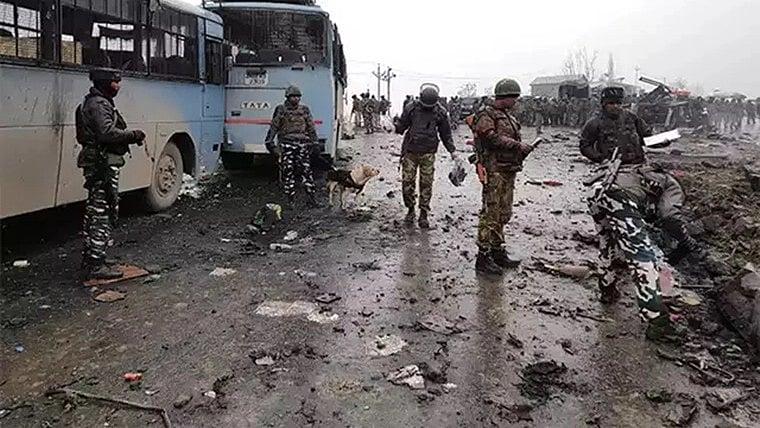
Prime Minister Narendra Modi on Saturday honoured the 40 Central Reserve Police Force (CRPF) personnel who lost their lives in the 2019 Pulwama terror attack, describing their sacrifice as a defining moment in India’s fight against terrorism.
Marking the anniversary of one of the deadliest attacks on Indian security forces, the Prime Minister remembered the courage of the jawans and reaffirmed the country’s commitment to safeguarding national security. The February 14, 2019 attack took place when a CRPF convoy travelling from Jammu to Srinagar was targeted near Lethapora in Jammu and Kashmir’s Pulwama district. A suicide bomber rammed an explosives-laden vehicle into one of the buses in the convoy, killing 40 personnel and injuring several others.
The assault was later claimed by the Pakistan-based terror group Jaish-e-Mohammed, triggering nationwide grief and anger. The incident marked a turning point in India’s approach to cross-border terrorism. Within days, the government initiated strong diplomatic measures, including revoking Pakistan’s Most Favoured Nation trade status, and intensified efforts to isolate terror networks globally.
On February 26, 2019, the Indian Air Force carried out precision airstrikes on a terror training facility in Balakot, across the Line of Control. The operation was followed by heightened military tensions and an aerial engagement the next day, during which Wing Commander Abhinandan Varthaman was captured and later returned to India. The episode signalled a shift in India’s response doctrine against terror threats originating across the border.
The Pulwama tragedy also led to significant internal security reforms. Later that year, the government moved to reorganise Jammu and Kashmir, revoking its special constitutional status and restructuring it into two Union Territories. Officials have often described the attack as a catalyst for reassessing both security and administrative strategies in the region.
Investigations conducted by the National Investigation Agency revealed that a large quantity of high-grade explosives, including RDX, was used in the attack. Through forensic analysis and DNA profiling, authorities identified the suicide bomber as Adil Ahmad Dar. The probe also uncovered how certain materials for the improvised explosive device had been sourced through online platforms, prompting stricter monitoring of sensitive chemical sales.
In the years following the attack, convoy movement protocols in the Kashmir Valley were overhauled. Security forces introduced revised Standard Operating Procedures, including temporary suspension of civilian traffic during large convoy movements and expanded use of air transport for personnel. Advanced surveillance tools, signal jammers and enhanced road sanitisation drills have since become standard practice.
On the international front, India worked with global bodies such as the Financial Action Task Force to increase scrutiny of terror financing networks, contributing to sustained diplomatic pressure on Pakistan.
Seven years after the tragedy, memorials across the country continue to honour the fallen personnel. The site at Lethapora stands as a solemn reminder of the cost of terrorism and the resilience of the nation. In his tribute, Prime Minister Modi reiterated that the bravery and sacrifice of the Pulwama martyrs remain etched in the nation’s collective memory and continue to guide India’s resolve against terrorism.